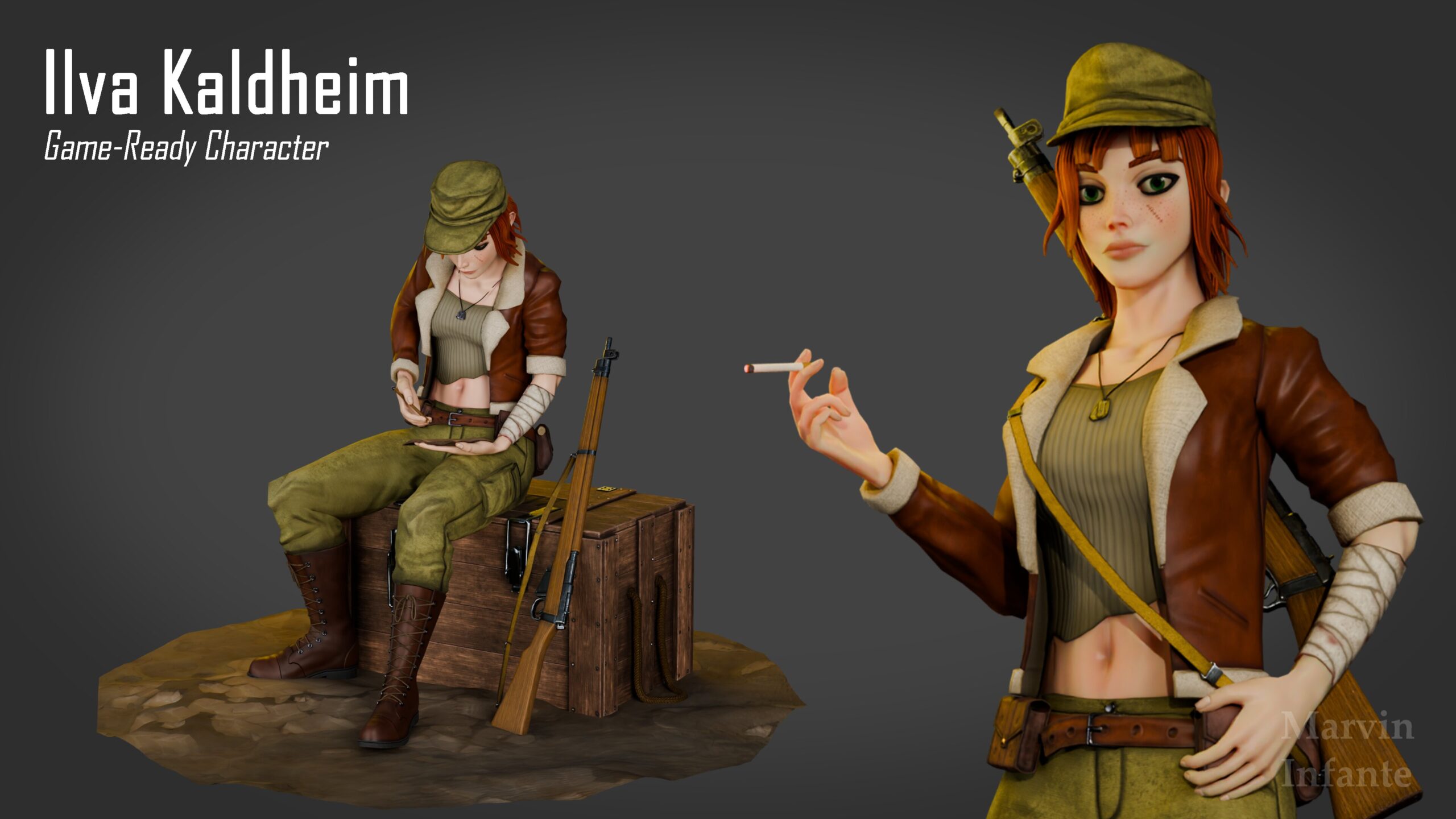
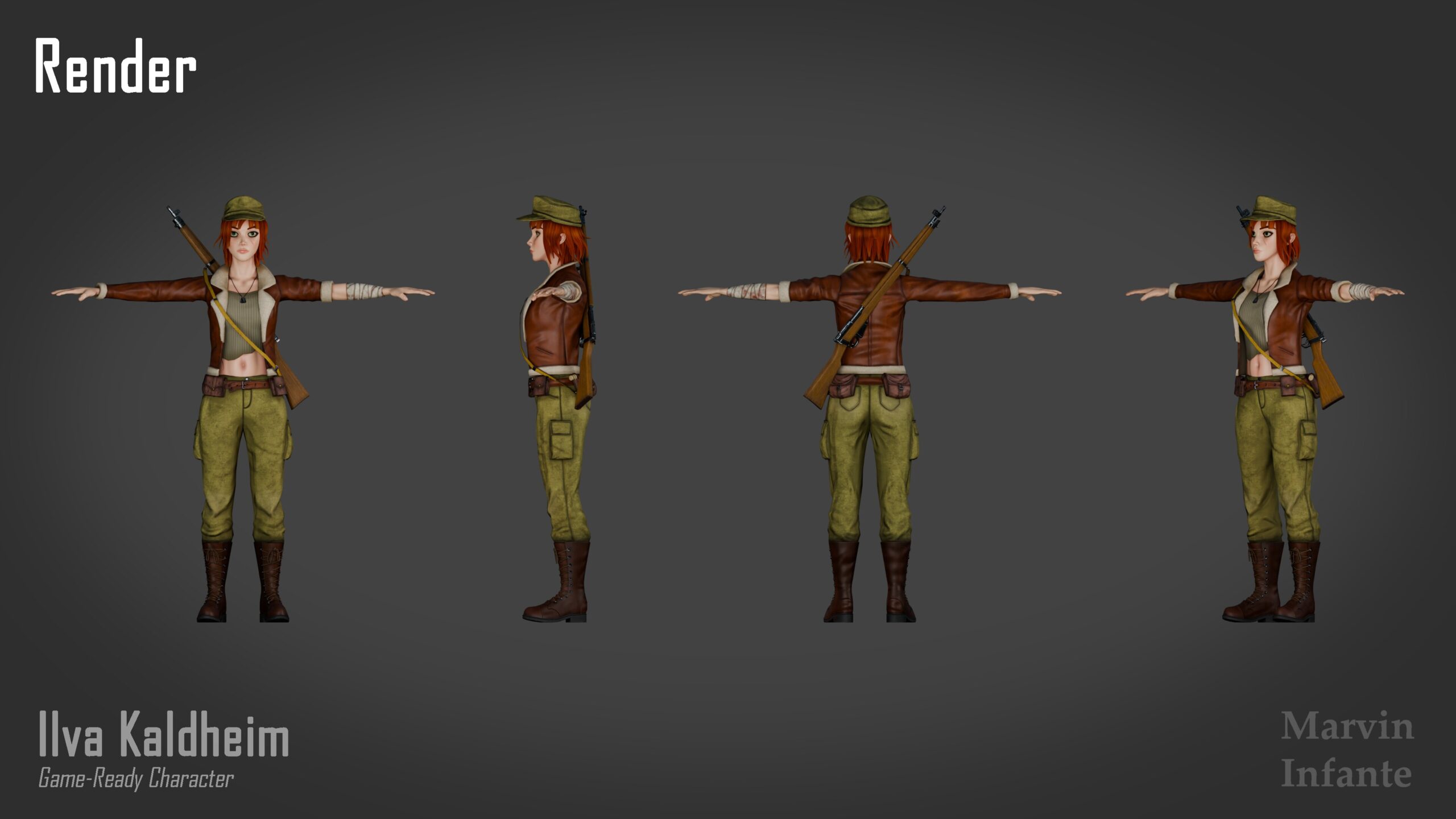
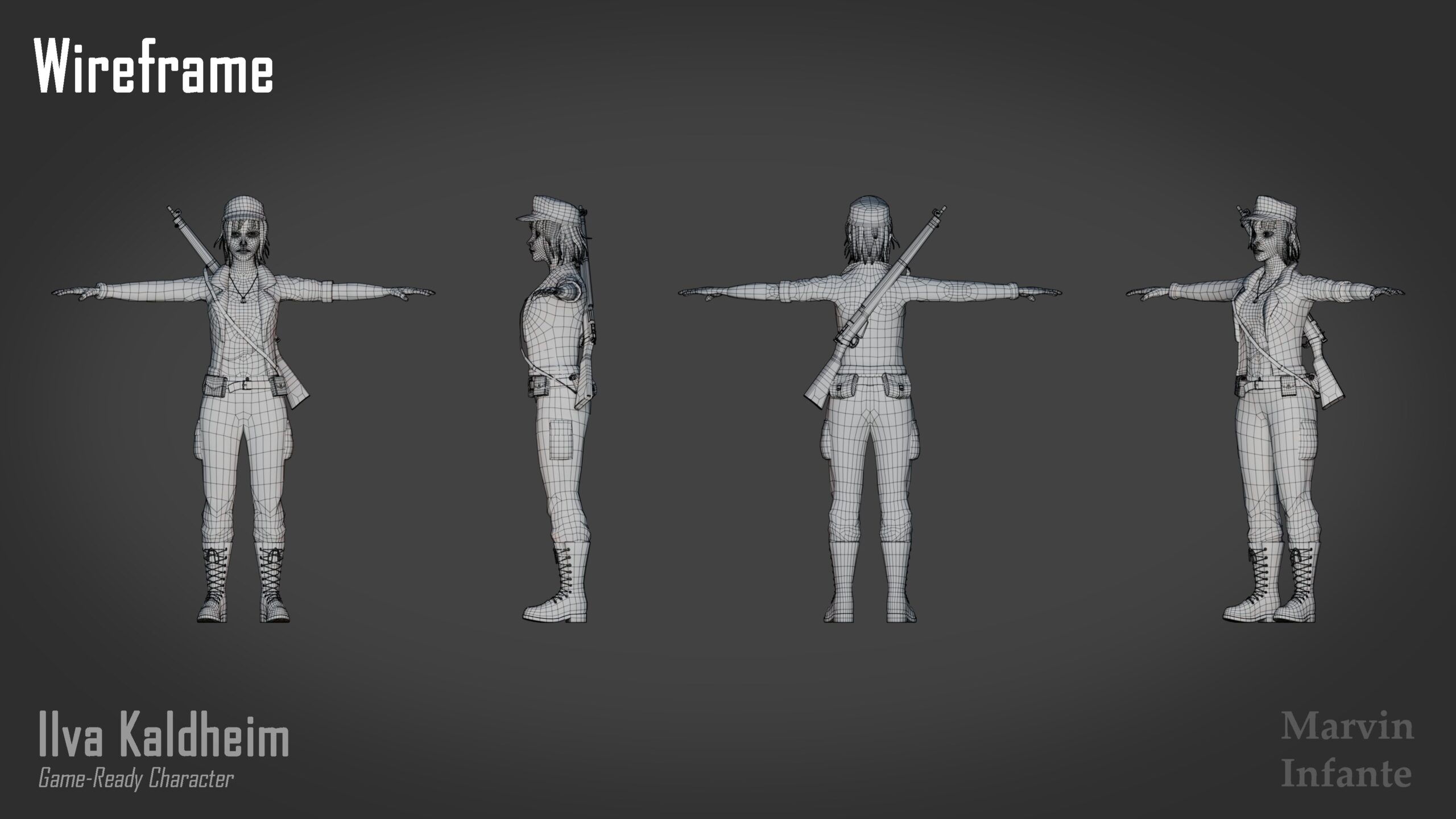
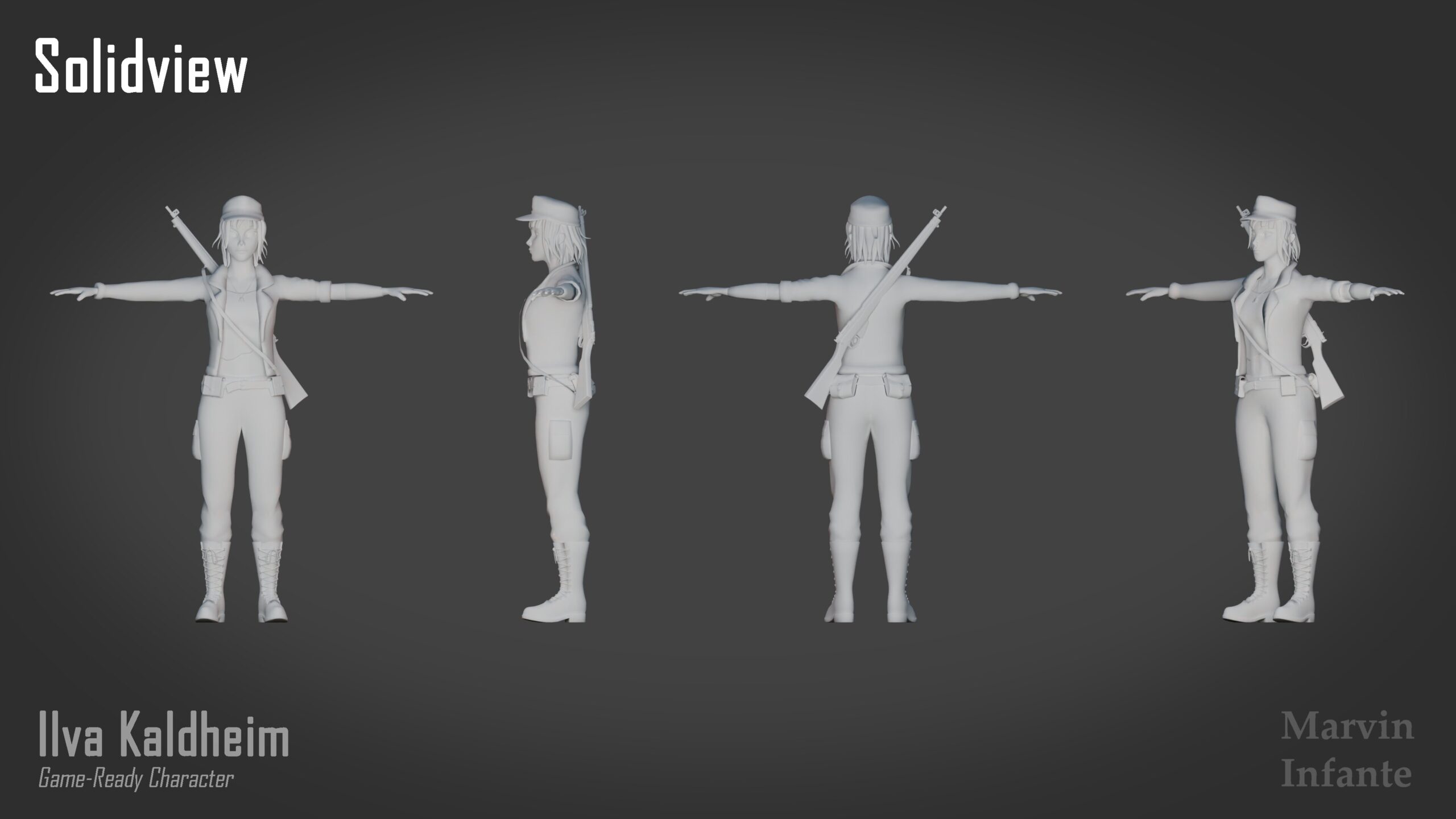
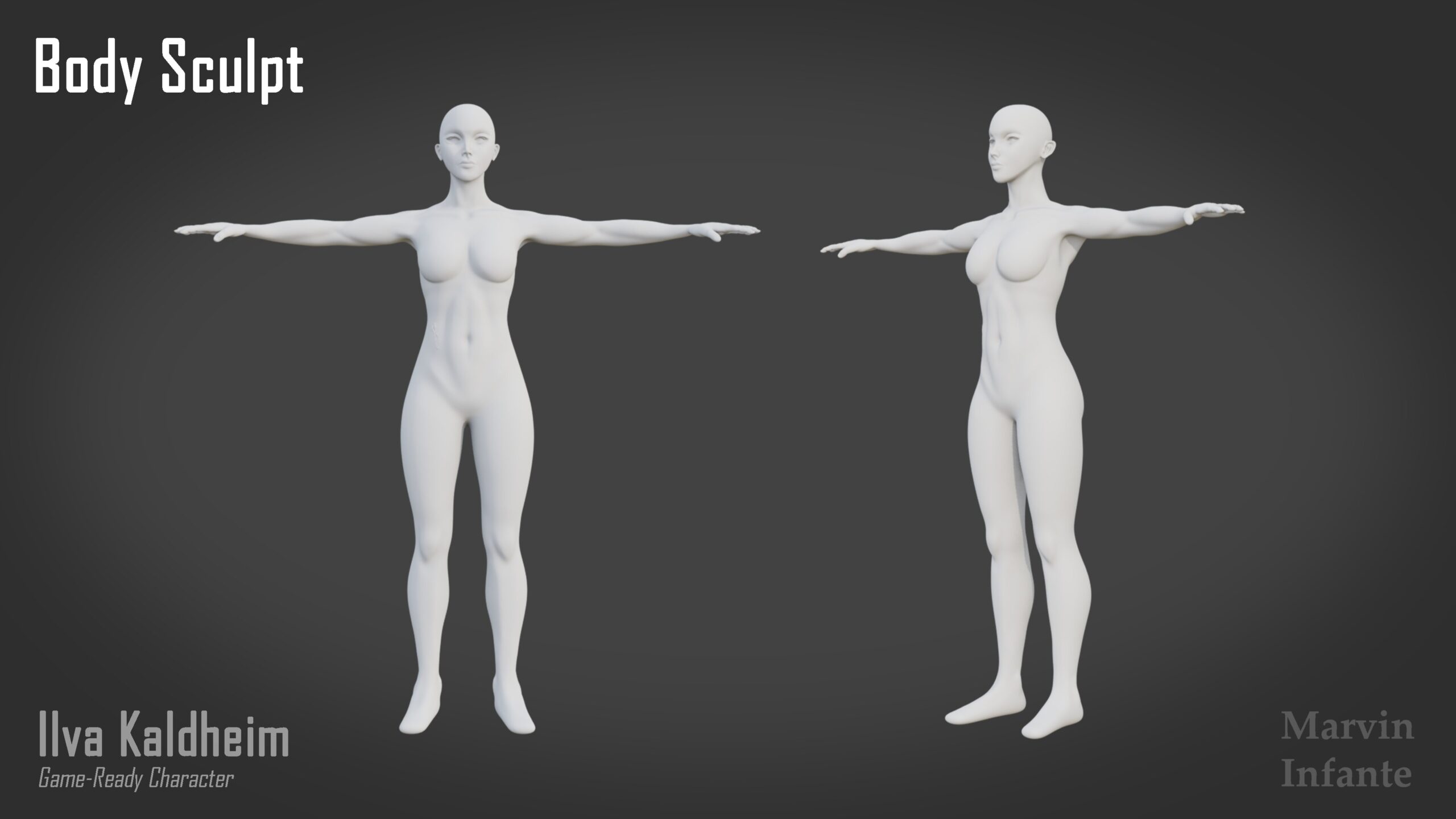
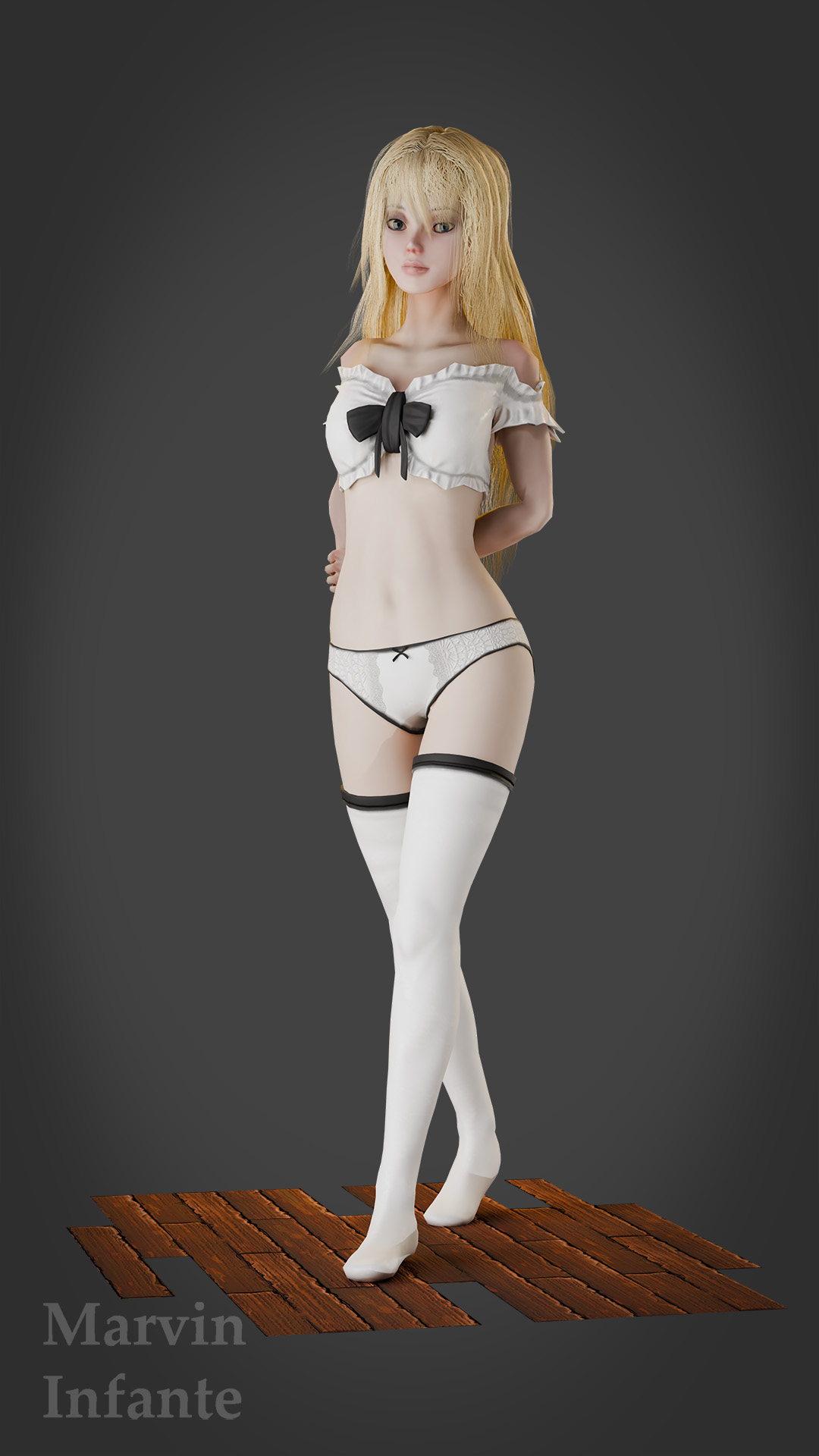
In this category, I present a selection of my character work. Each character is created to function both technically clean and visually convincing within a game environment. The projects reflect my growing understanding of anatomy, expression, and form — from early sculpts to more refined models.
Ilva Kaldheim is a stylized, game-ready character that I created as a personal exercise to keep developing my character creation workflow. Instead of aiming for a completely new kind of result, I used this project to work on two specific areas that I felt were still holding my characters back: the folds and drape of the clothing, and the way I build hair.
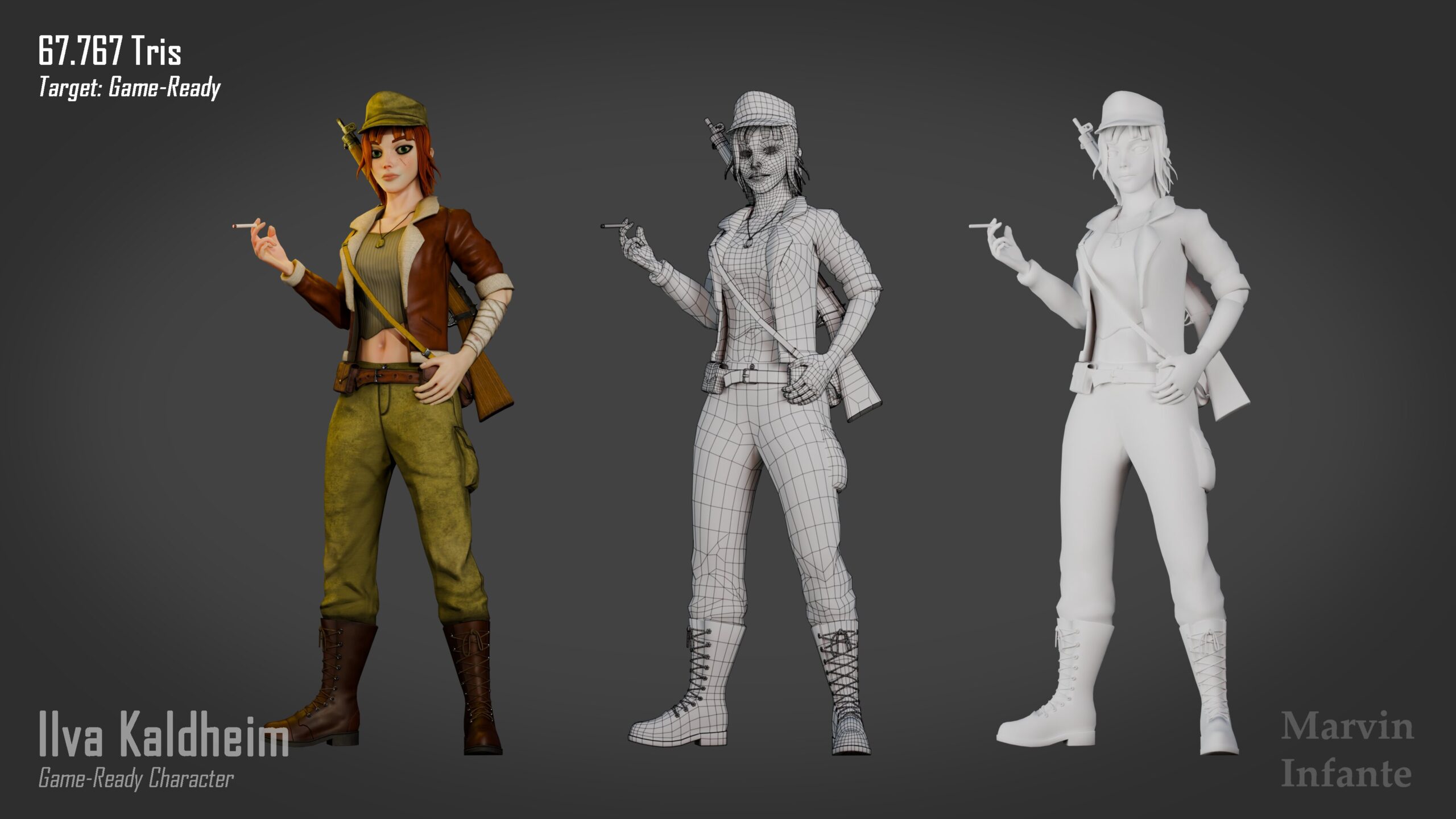
The clothing was the core of the exercise. I sculpted the outfit as a separate high-poly pass and paid close attention to how the different materials behave: stiff leather folds differently from the softer fabric of the trousers or the ribbed knit of the top. Those sculpted details were then baked into normal maps for the game-ready mesh, which keeps the silhouette clean and the triangle count under control while preserving the surface information.
The second focus was the hair. In my previous characters I worked with hair cards and alpha channels, a method I never fully got to read the way I wanted. For Ilva I switched to a curve-based approach: I built the hair with curves in Blender, converted them into meshes and textured them accordingly. This gave me noticeably more control over the shapes and the overall flow of the hairstyle.
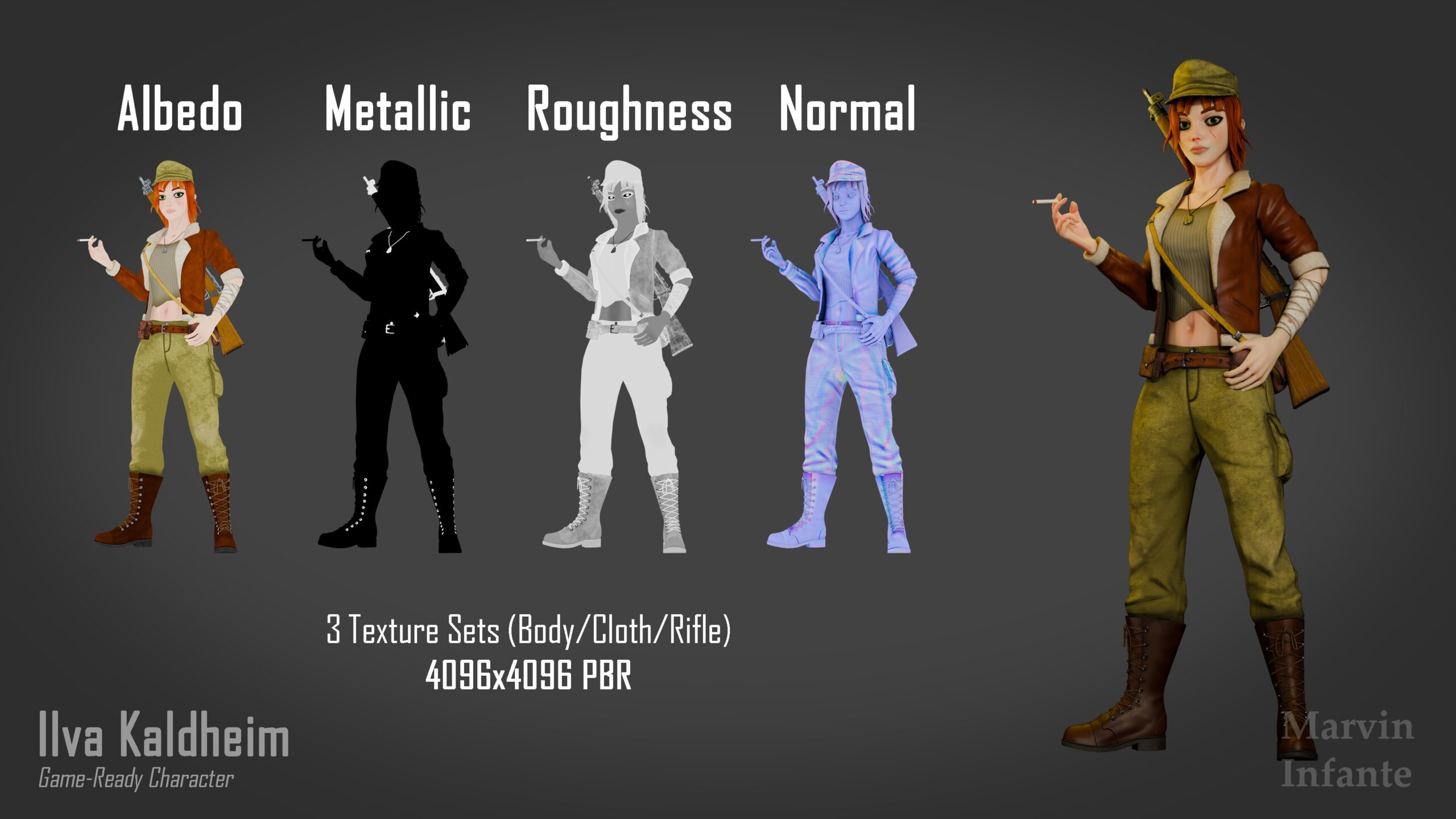
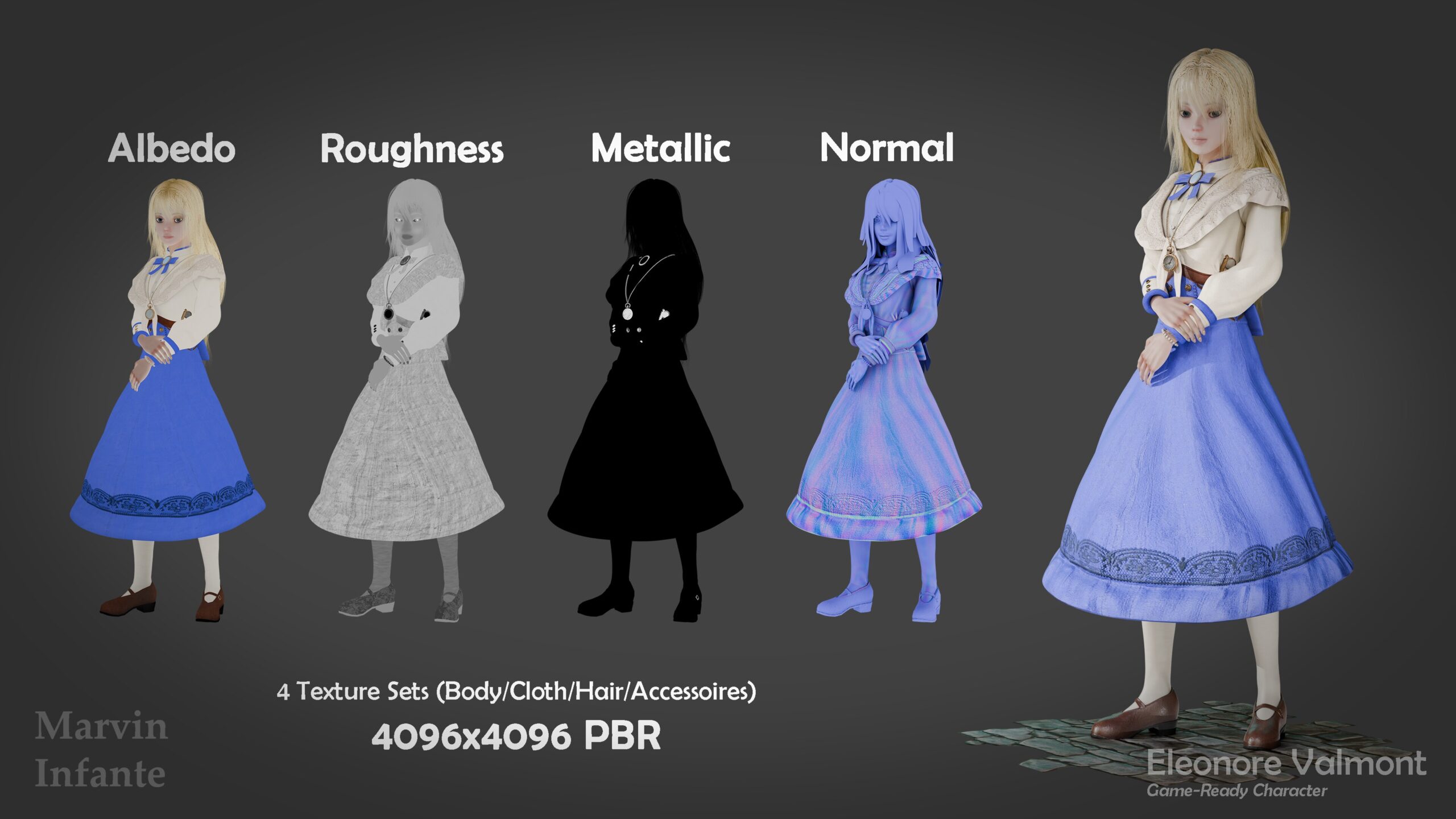
Texturing was done in Substance Painter across three texture sets (body, cloth and rifle) at 4096×4096, using a standard PBR setup with albedo, metallic, roughness and normal maps. The final mesh comes in at 67,767 triangles.
To make sure the character actually holds up as a game asset and not only as a render, I rigged her and tested her directly in Unreal Engine 5.
Overall, this project was another solid step in making my character pipeline more reliable. The cloth bake worked out better than in my previous attempts, and switching the hair to curves was the change I got the most out of. At the same time I can clearly see where to go next: refining the smaller fabric details and pushing the skin and face texturing further are the areas I want to focus on in my next character.
Tools used:
Blender
Unreal Engine
Substance Painter
042 Eleonore Valmont | Game-Ready Character | 2026
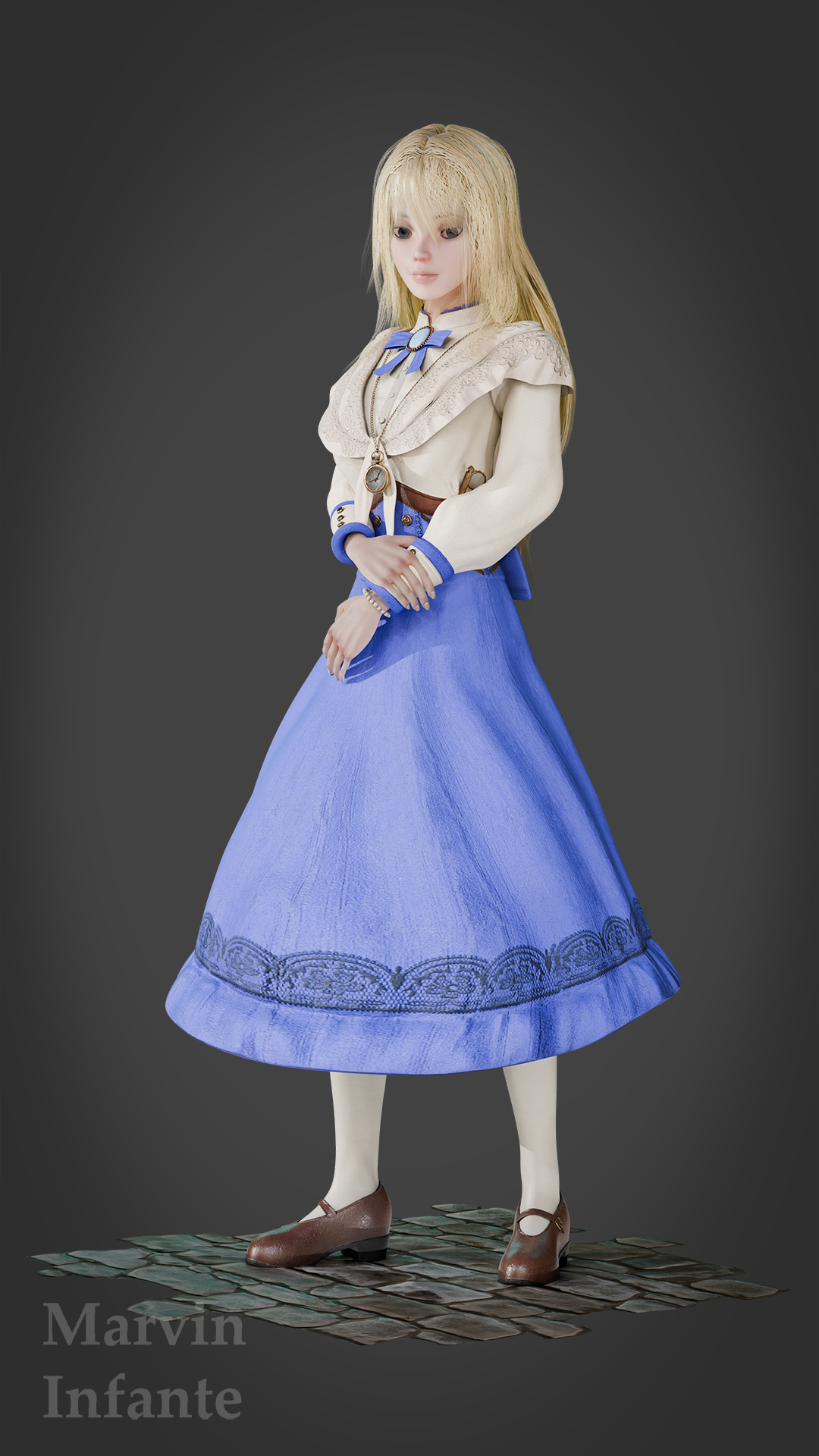
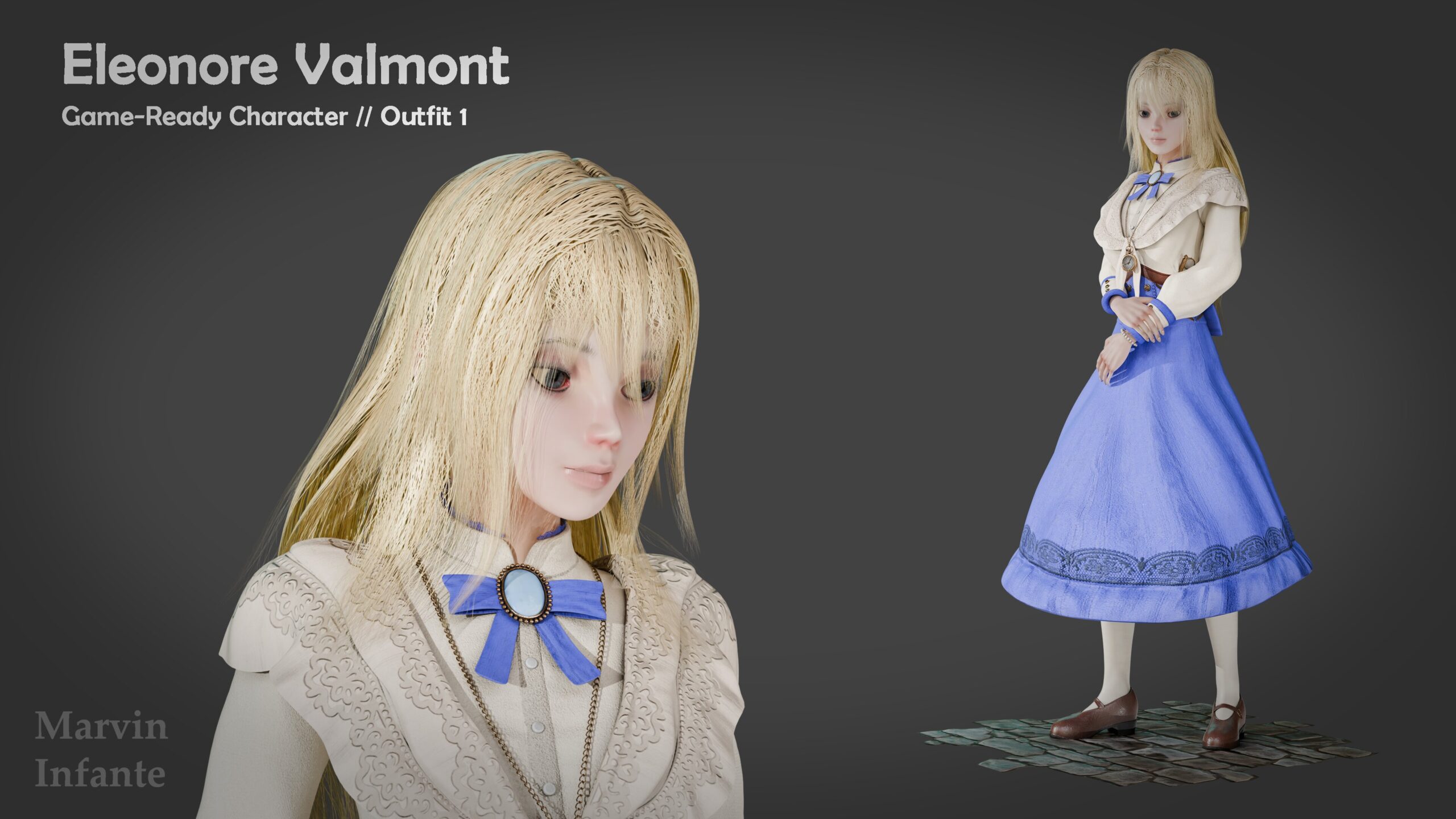
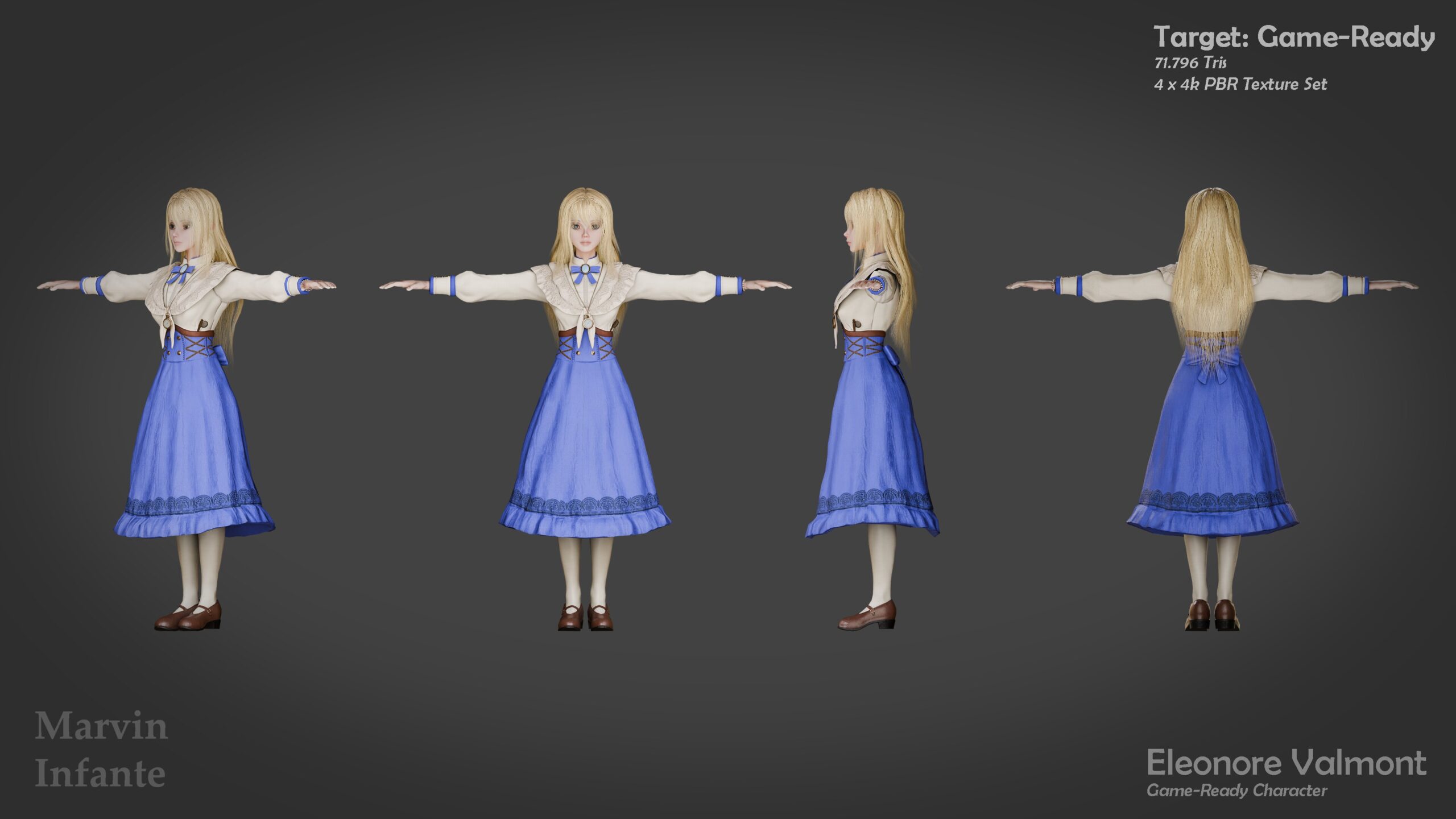
Eleonore grew up as the only daughter of a watchmaker in a harbour town. The cameo brooch at her throat was the last piece her father worked on before his hands began to shake. After her father’s death she kept the workshop running on her own, at a time when a young woman was not trusted with that kind of work.
For this project I deliberately changed the order of my design process. Instead of collecting references first, I started by writing Eleonore’s backstory: where she comes from, what she does for a living, what she carries with her and why. Only afterwards did I build the moodboard and gather reference material.
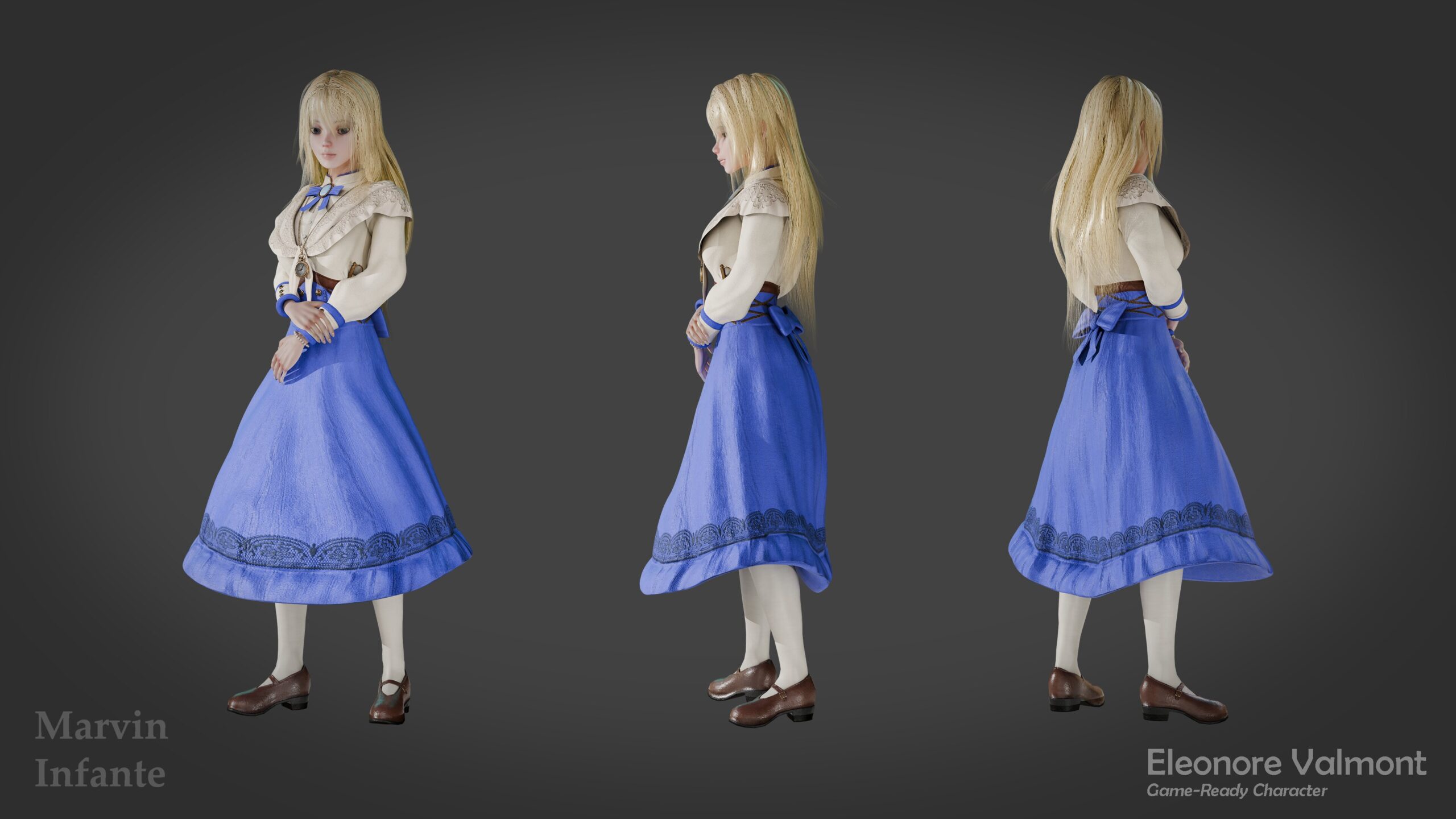
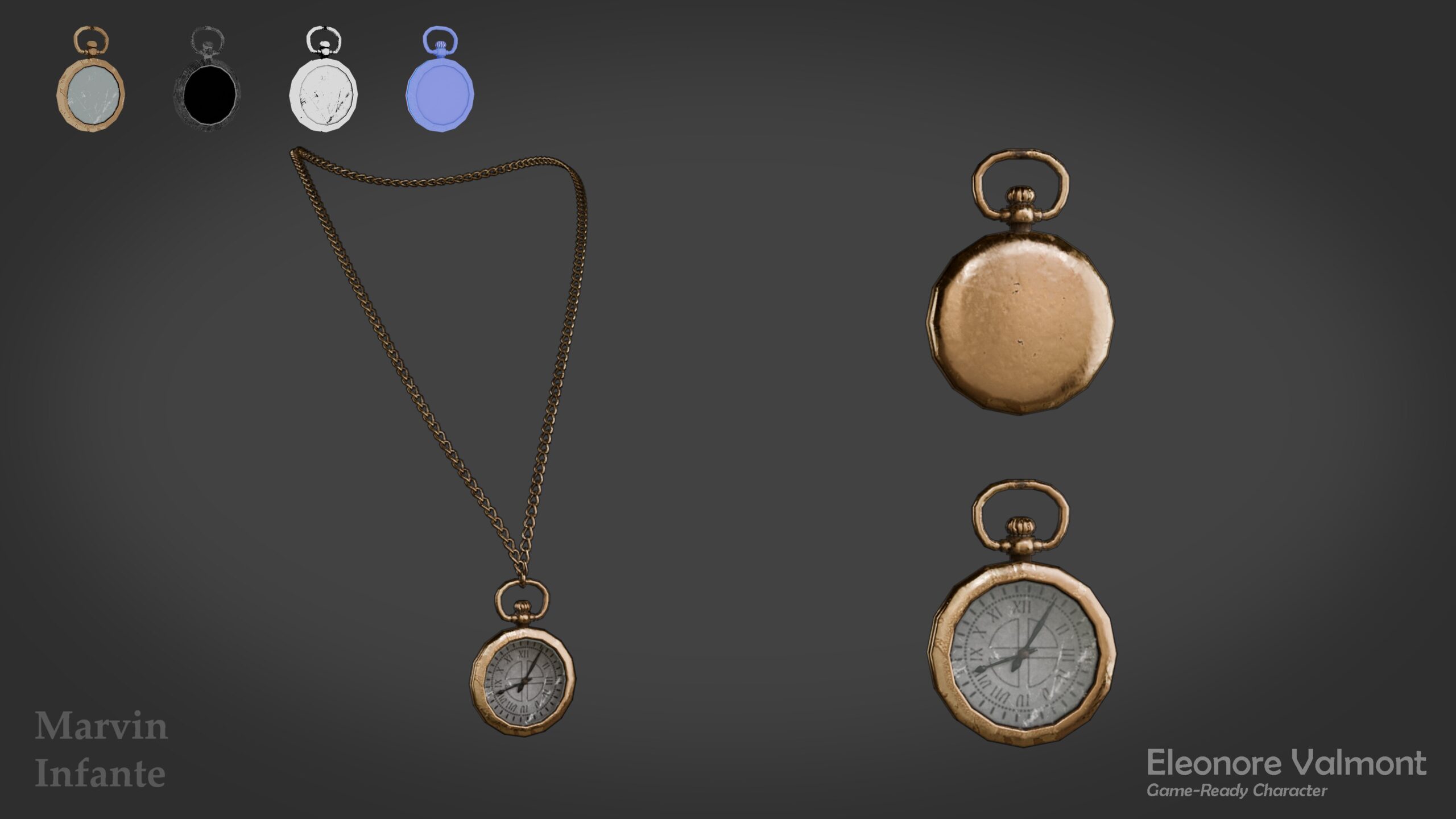
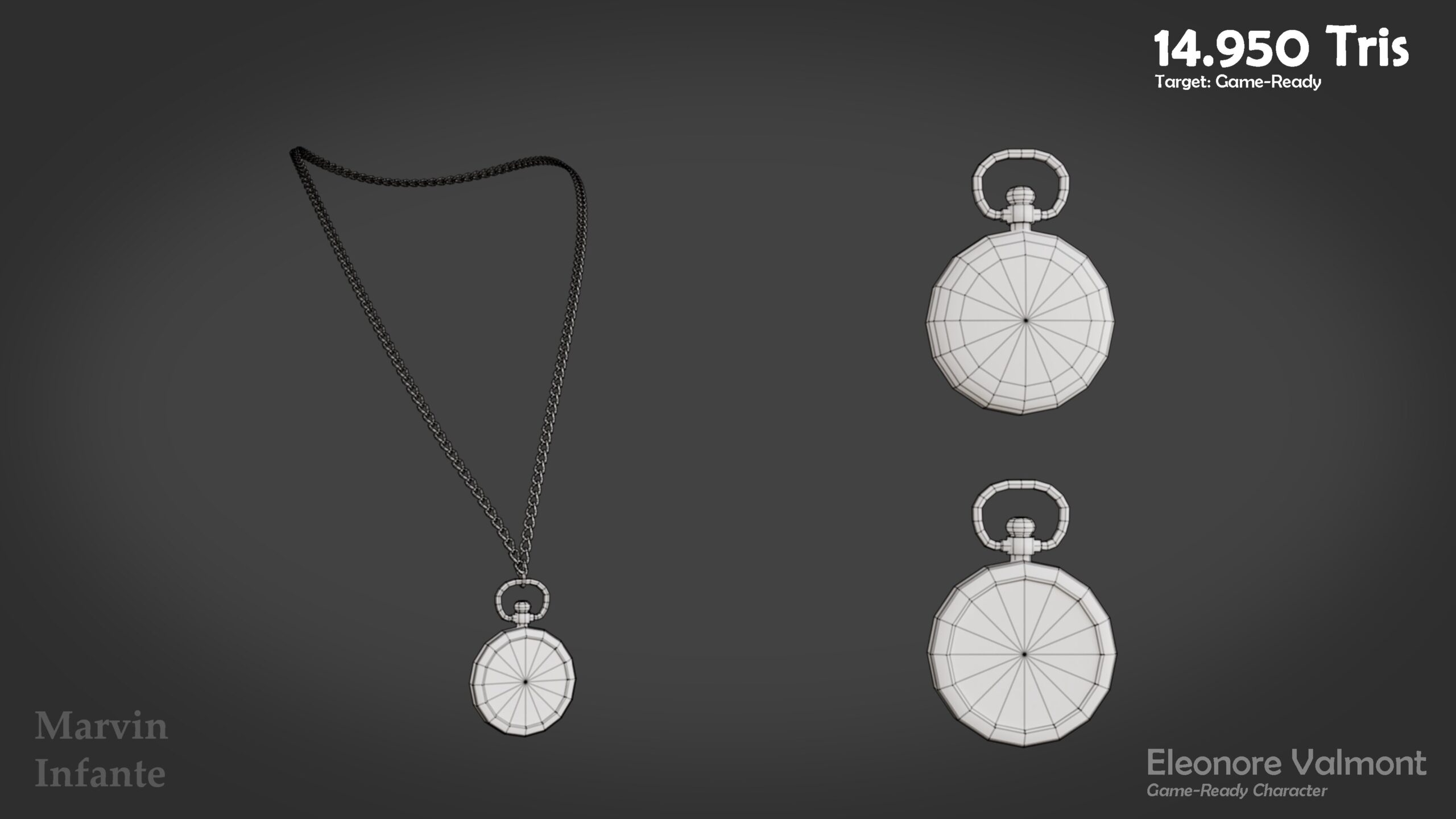
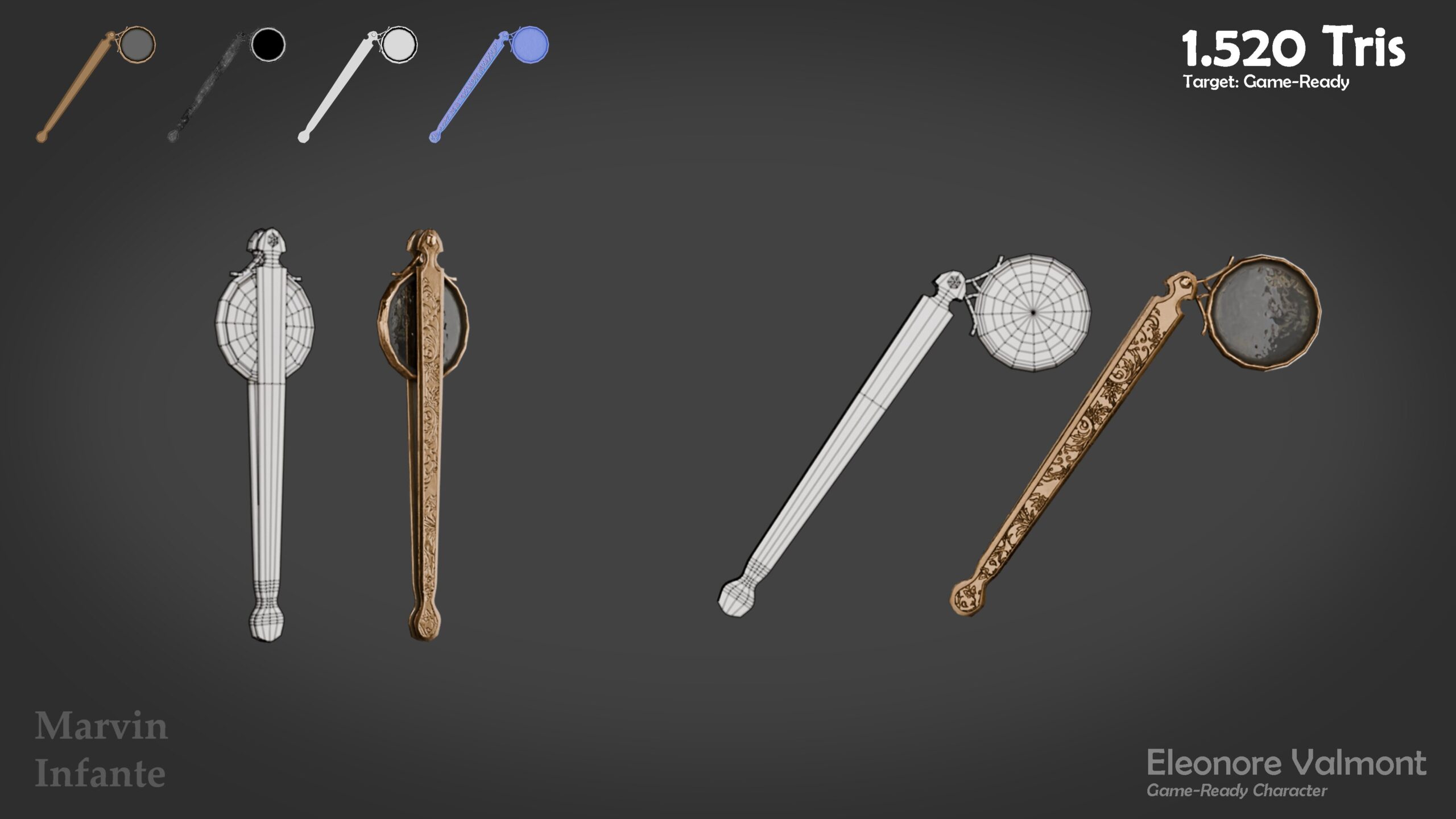
That change affected almost every design decision that followed. The pocket watch on her chest, the empty cameo at her throat, as well as the Loupe on her hip are not decorative accessories, they come directly from the story. Working this way made the silhouette much easier to decide on, because every element had to justify itself against something I had already written down.
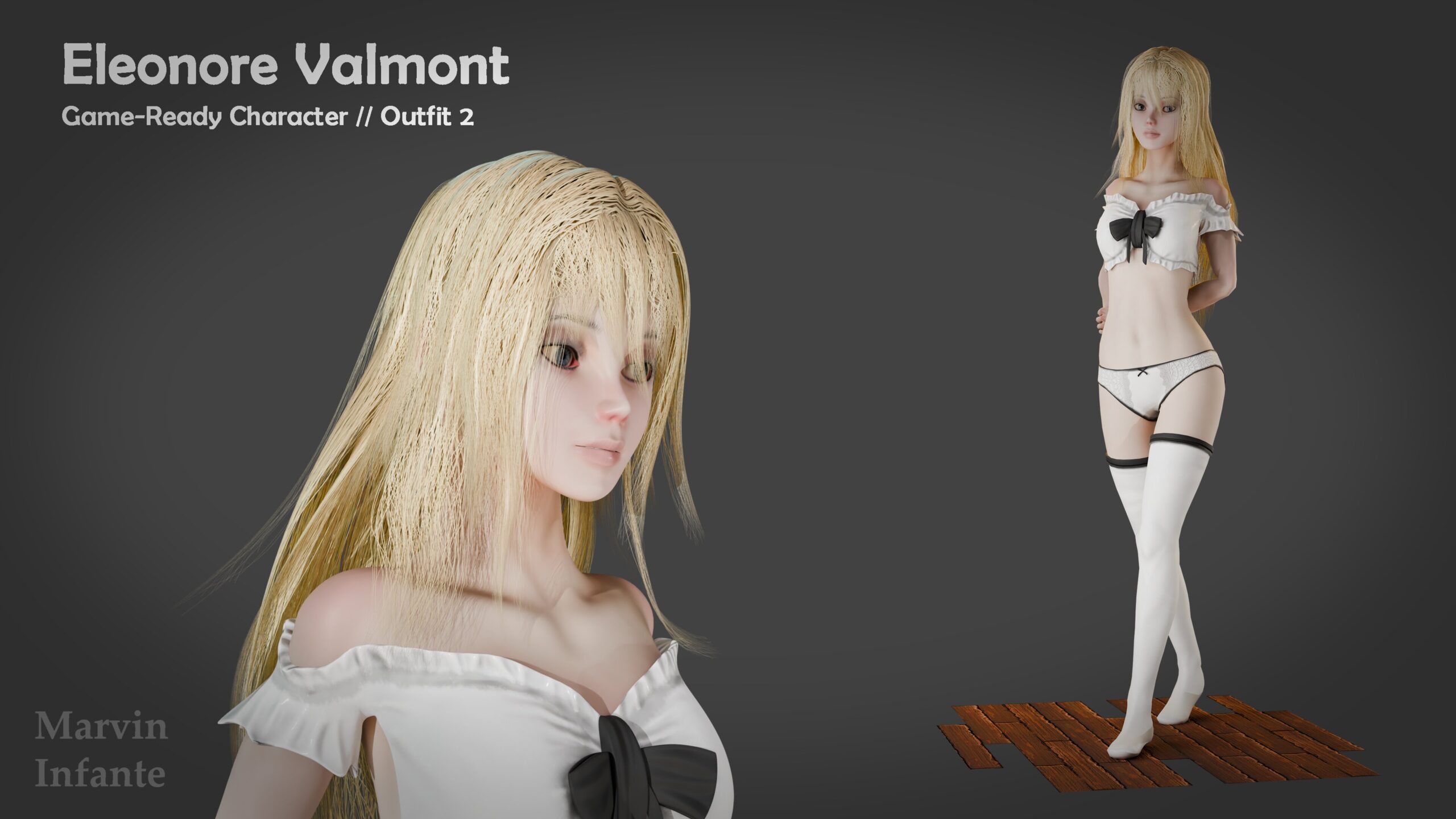
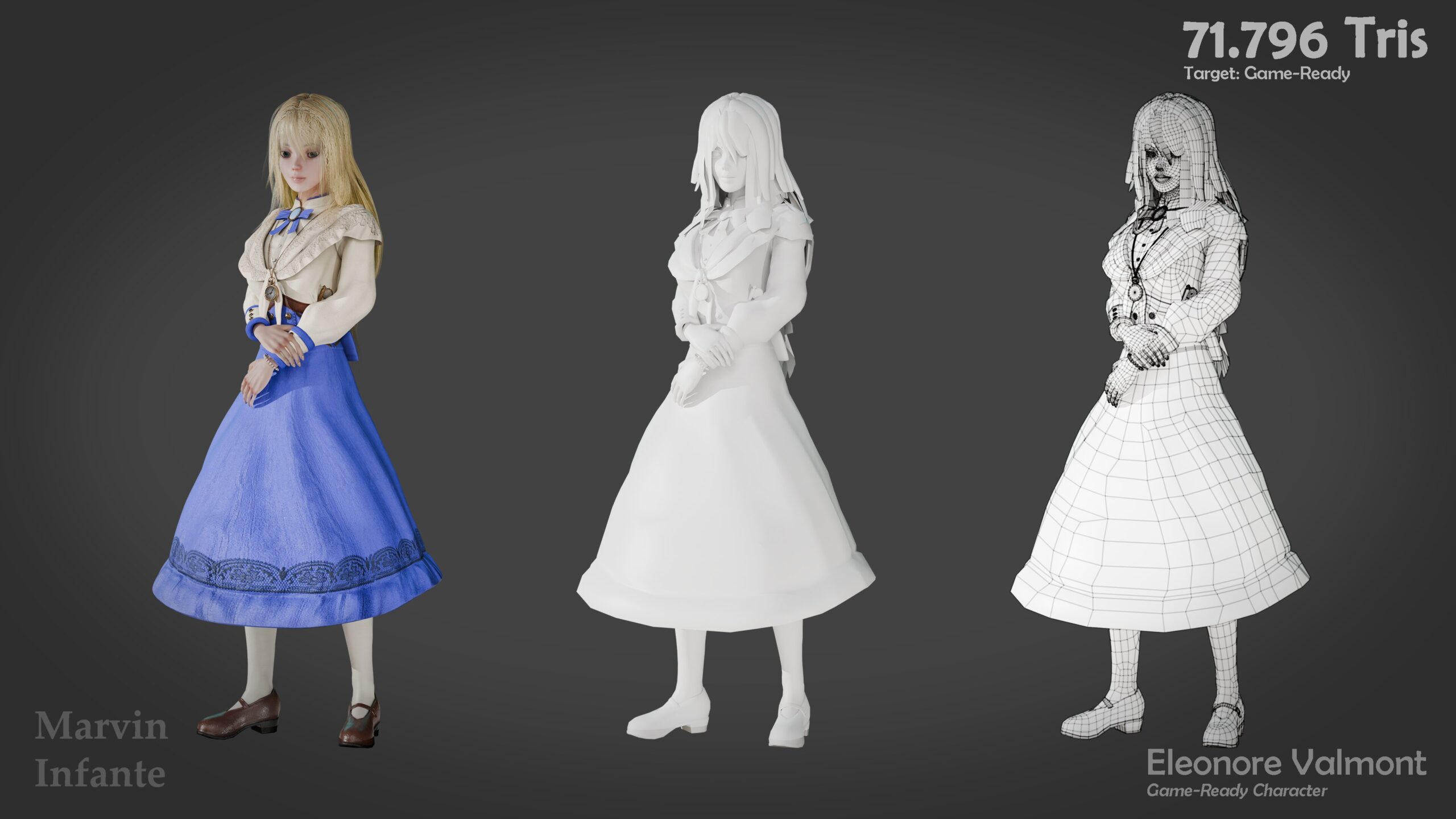
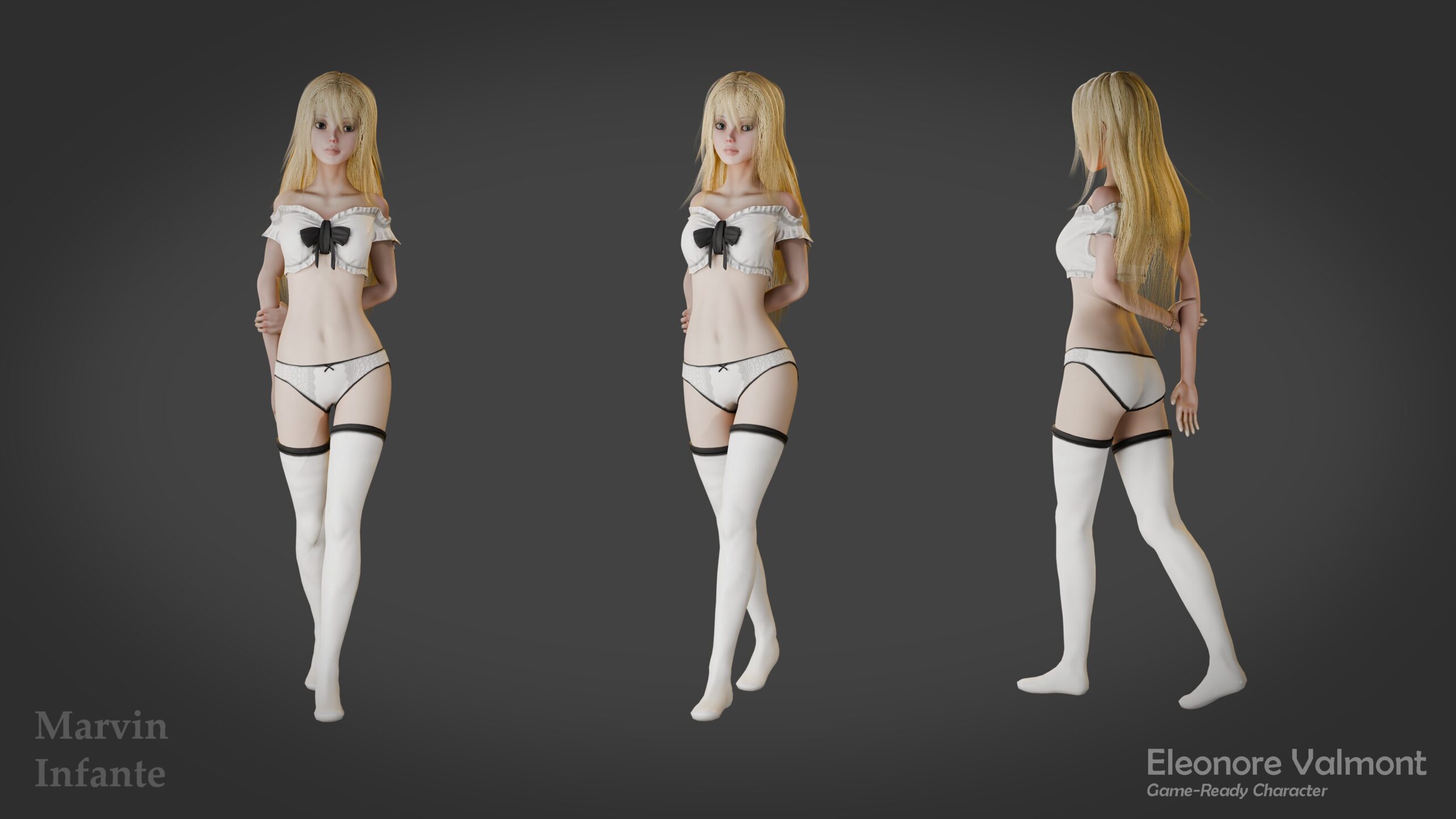
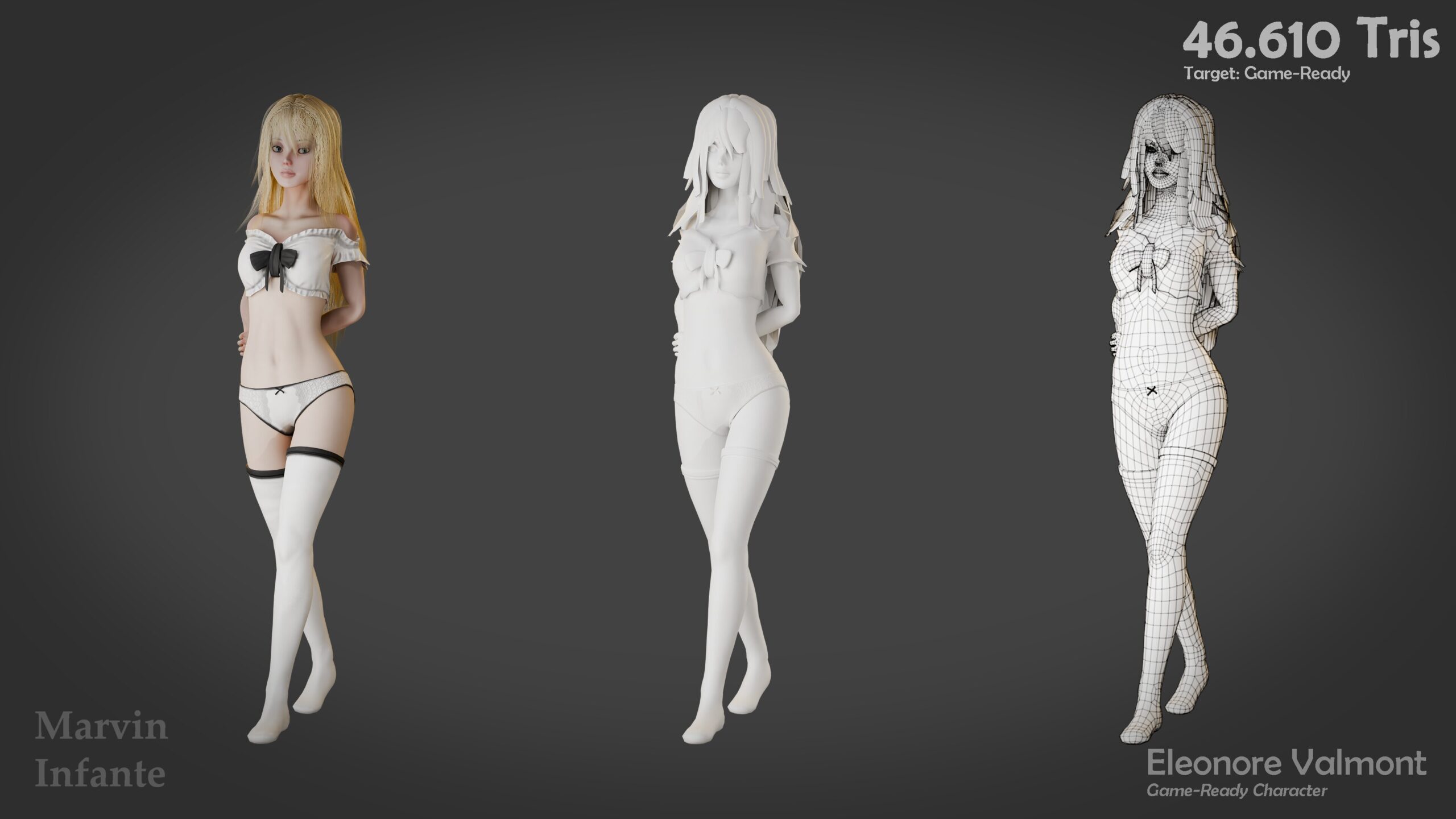
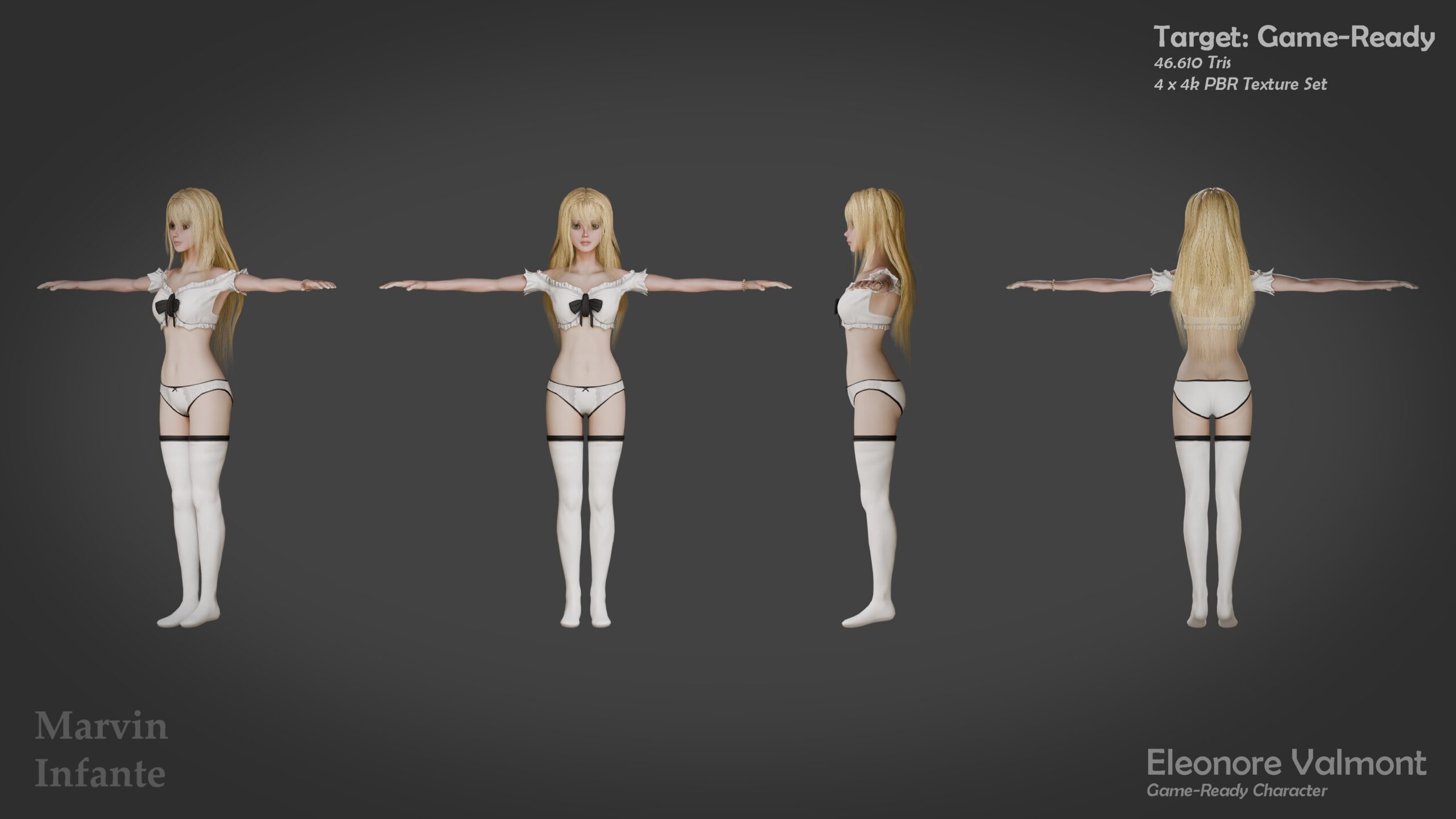
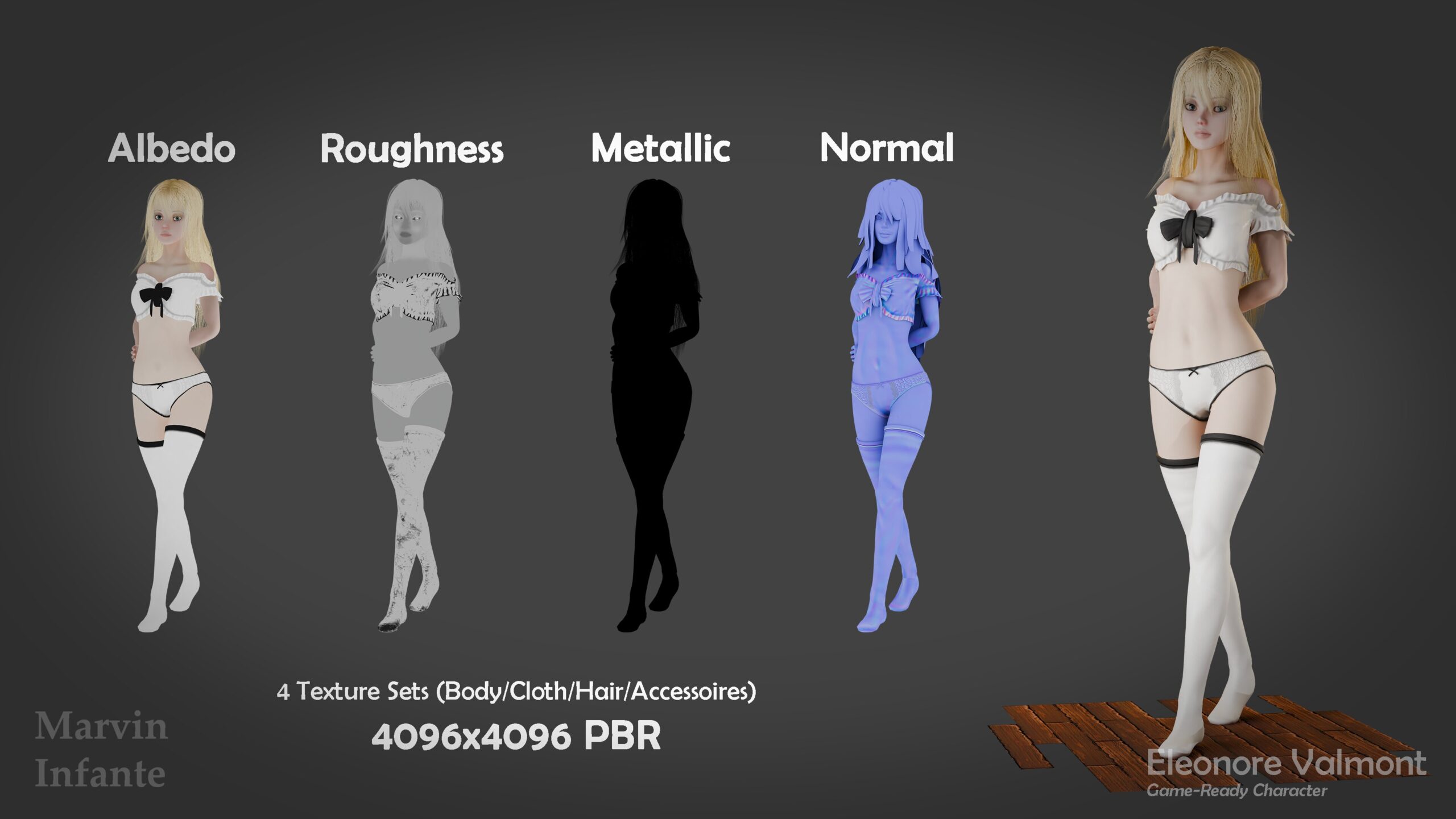
Both outfits were built with a strict budget in mind: stay under 100k triangles per version. The full outfit with blouse, cape collar and skirt came in at 71,796 tris, the second, lighter outfit at 46,610 tris. Keeping those numbers meant deciding very consciously what actually needs geometry and what can be solved with textures and normal maps.
The character was rigged and animated and then brought into Unreal Engine 5, which was the part of the pipeline I had the least experience with going in. This is also where I ran into the biggest technical problem of the project: the alpha textures on the hair caused shading issues in the engine that did not appear in Blender. Getting the hair and the transparent details of the Cloth and accessories to read correctly took by far the most iterations of anything in this project.